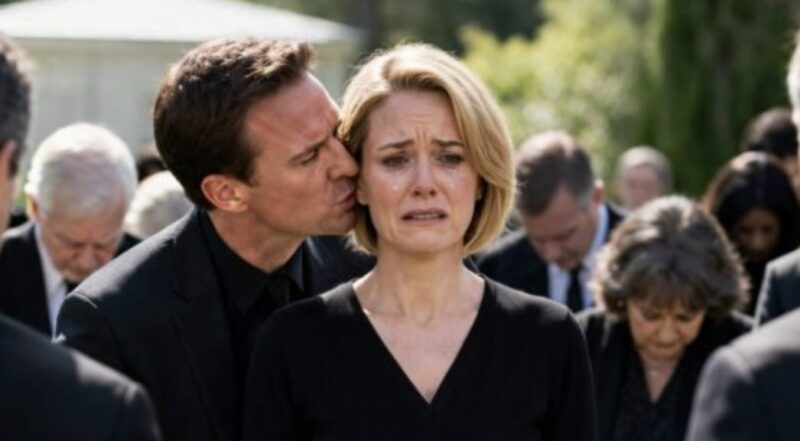
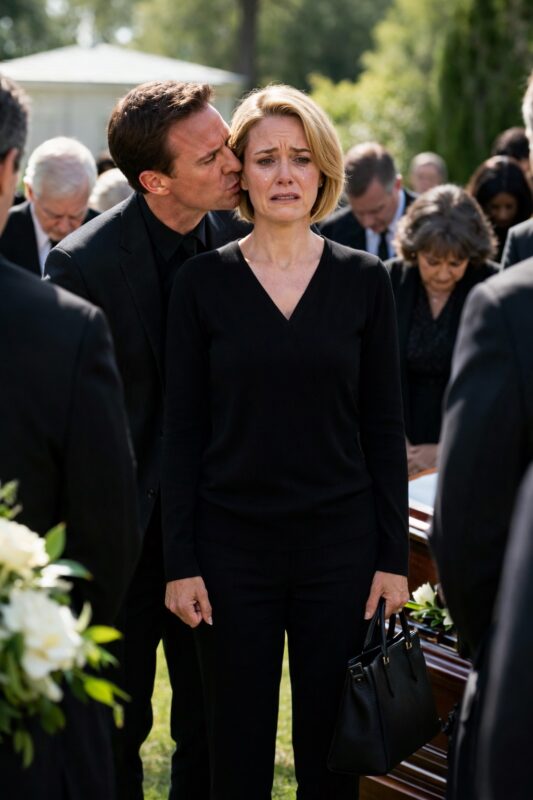
At my father’s funeral, my husband came up to me and whispered in my ear, “I’ve changed the locks on the million-dollar apartment you inherited from your father. If you don’t like it, we can get a divorce.” I gave a sly smile, because he had no idea what was coming… 😨 😭
He took my smile as a sign of defeat. He didn’t even wait until the funeral ended—he left, convinced he had already won. I stayed until the very end, received the condolences, and then called someone whose number I hadn’t used in years.
— “It’s time,” I said.
That evening, we went to the apartment. We opened the door not by force, but with a key. My key. The locks had been changed, but the door wouldn’t open with them. The secret entrance to the apartment, which my father had told me about only once, still worked. My husband had never cared about the structure of the house; only its value mattered to him.
Inside, it was dark. The workers he had hired had already begun the “renovations”: the document cabinet was emptied, the wall safe opened. But they had not found what they had rushed for.
When he returned, probably with a triumphant expression, he found us already sitting inside. He stopped at the threshold, for the first time unsure what to say.
The rest of this story is in the first comment. Here’s the response he got. 👇 👇 👇
He tried to enter as if he were still the owner, but the investigator simply raised a hand.
— “One more step and it will be considered illegal entry,” he said calmly.
My husband looked at me. I knew that look well: calculating, quickly searching for options. He understood that opening the safe had been in vain, but he still didn’t understand why I was calmly sitting in his house, behind the door whose locks he had changed.
— “It’s a misunderstanding,” he said, trying to smile. “I was just having our house renovated.”
The lawyer placed a folder on the table.

— “The legal difference between ‘yours’ and ‘ours’ is here,” he said. “The apartment is your wife’s personal inheritance. Your actions were recorded by the cameras.”
He didn’t open the folder. Instead, he swept his gaze across the room, looking for something to regain control. His eyes stopped at the empty safe.
— “Where is it?” he whispered.
I said nothing.
The investigator approached the window and drew back the curtain. Outside, two police officers were already there.
At that moment, his phone rang. He looked at the screen, turned pale, and rejected the call. I knew who it was. The bank. The one where, a few hours earlier, he had tried to present a forged power of attorney.
— “You don’t know what you’re doing,” he said, now without confidence.
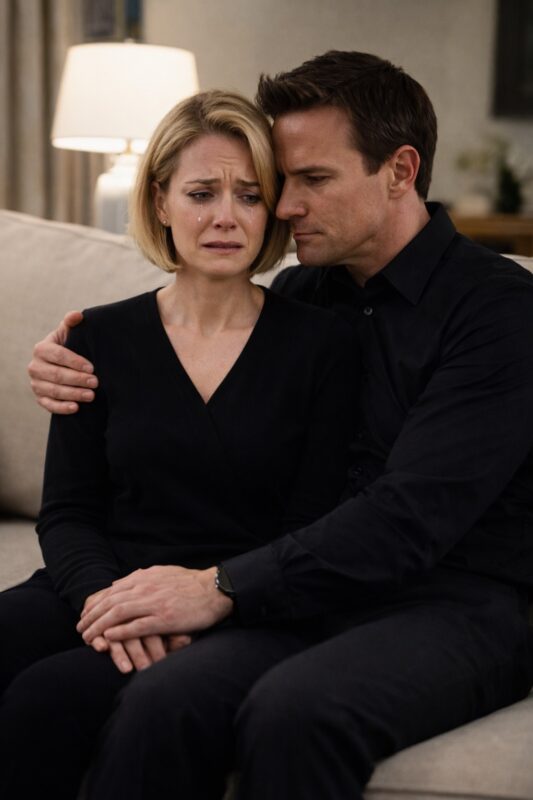
— “On the contrary,” I replied. “For the first time, I know exactly what I’m doing.”
The investigator stepped closer to him.
— “Please follow us.”
He didn’t resist. For a moment, it seemed he wanted to say something to me, but he found no words. The door closed behind him—this time with the lock I had changed.
Silence filled the room. I approached the safe and opened the inner compartment he hadn’t noticed. Inside were the documents, the USB drive, and the last letter left by my father.
The lawyer looked at me.
— “Are you sure?”
I nodded.
Through the window, we could see him being placed into the car. He no longer looked up.
I closed the safe, took the letter, and for the first time that day, allowed myself to sit down.
The game wasn’t over.
But at that moment, I had won.
If you want, I can also make a more dramatic, suspenseful English version that heightens the tension and the sense of revenge in the story. Do you want me to do that?